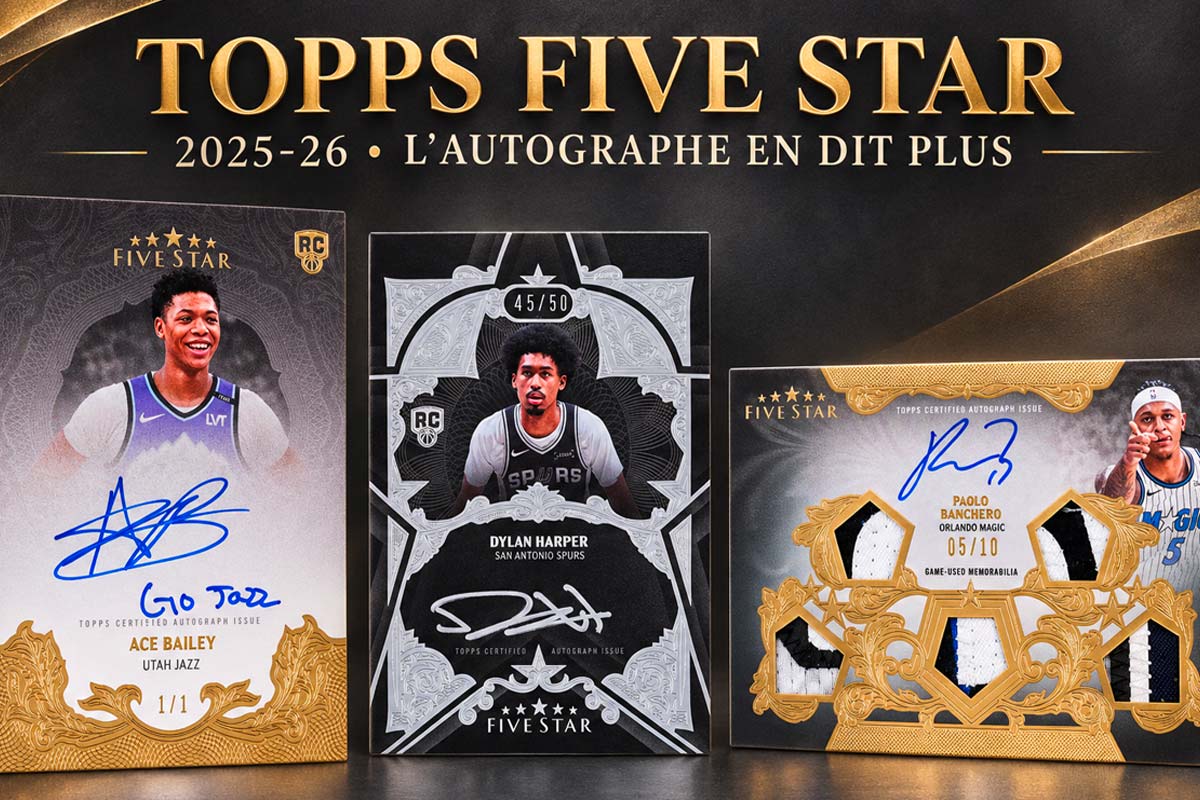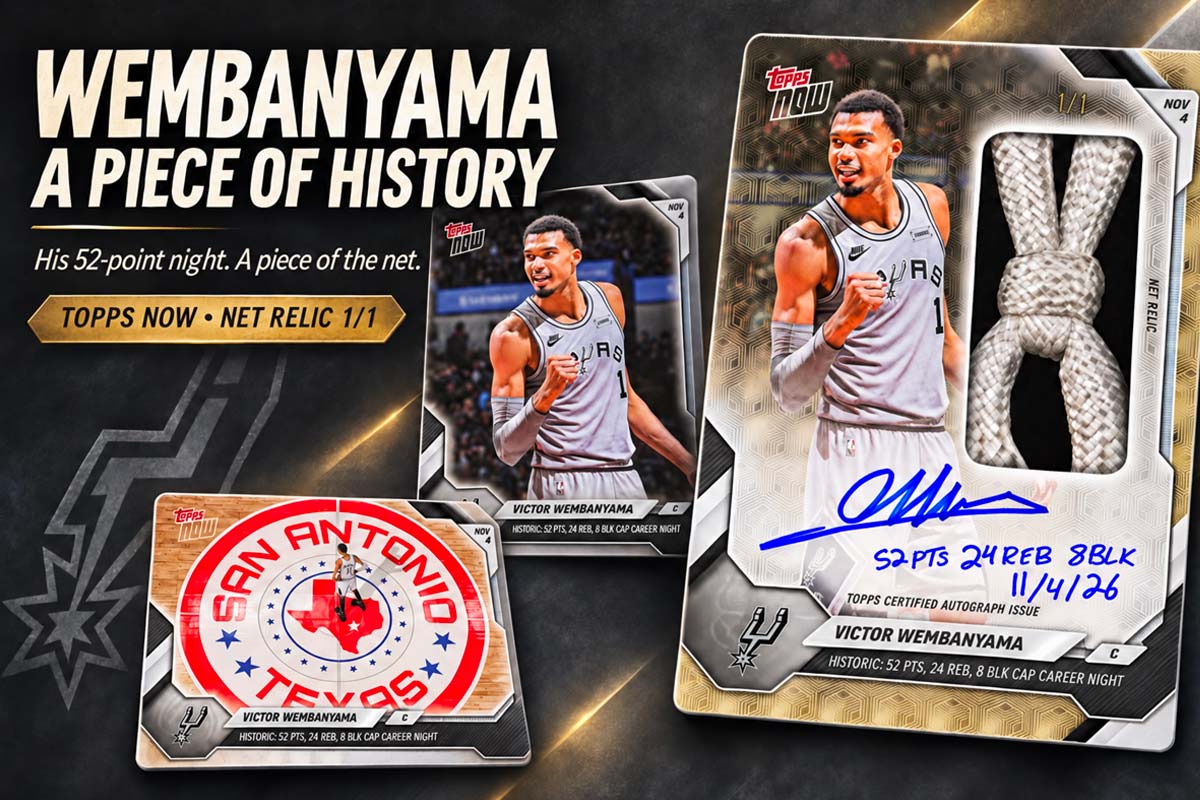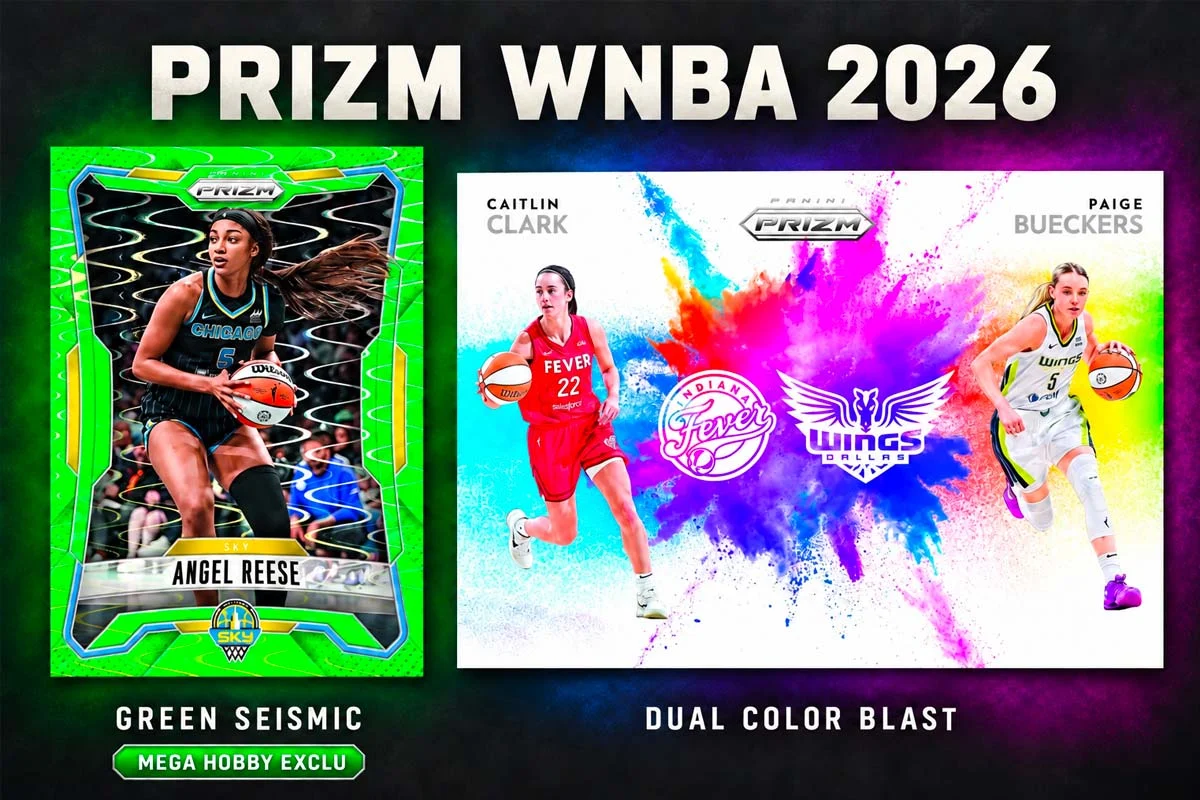

A piece of white fabric, smooth, desperately clean, housed in the window of a $500 card. On the back, the verdict drops, icy: « The enclosed player-worn/used material is not from any specific game or event. » Worse still, the now-famous mention « not associated with any player » has finished off the relic myth. For a decade, Panini has accustomed collectors to this form of industrial laziness, turning the “hits” into mere scraps of training jerseys or sweatshirts bought in supermarkets.
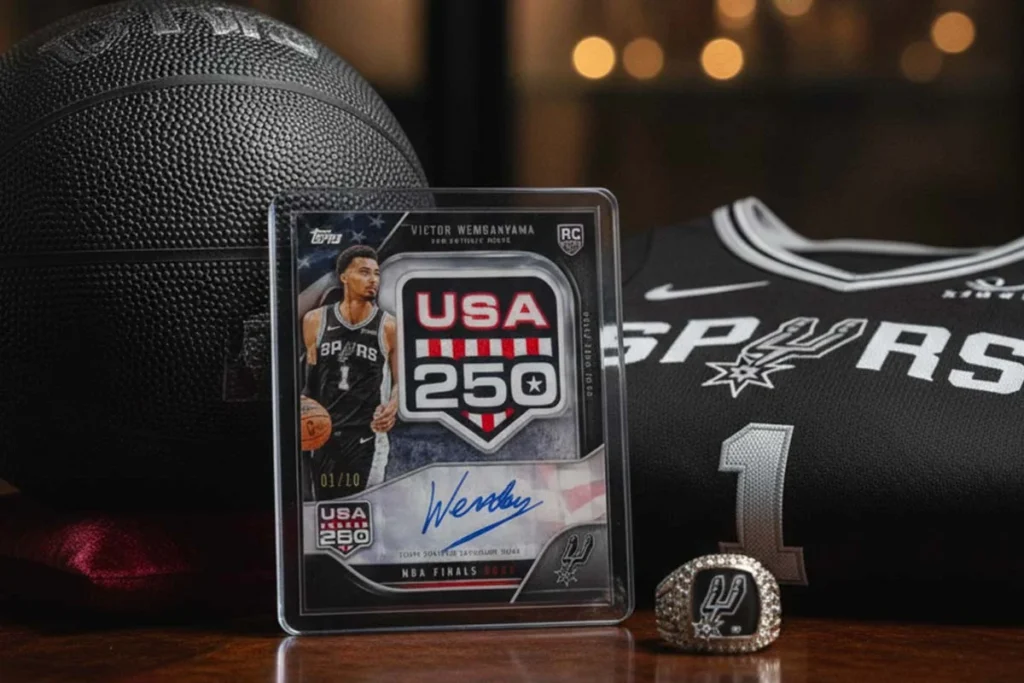
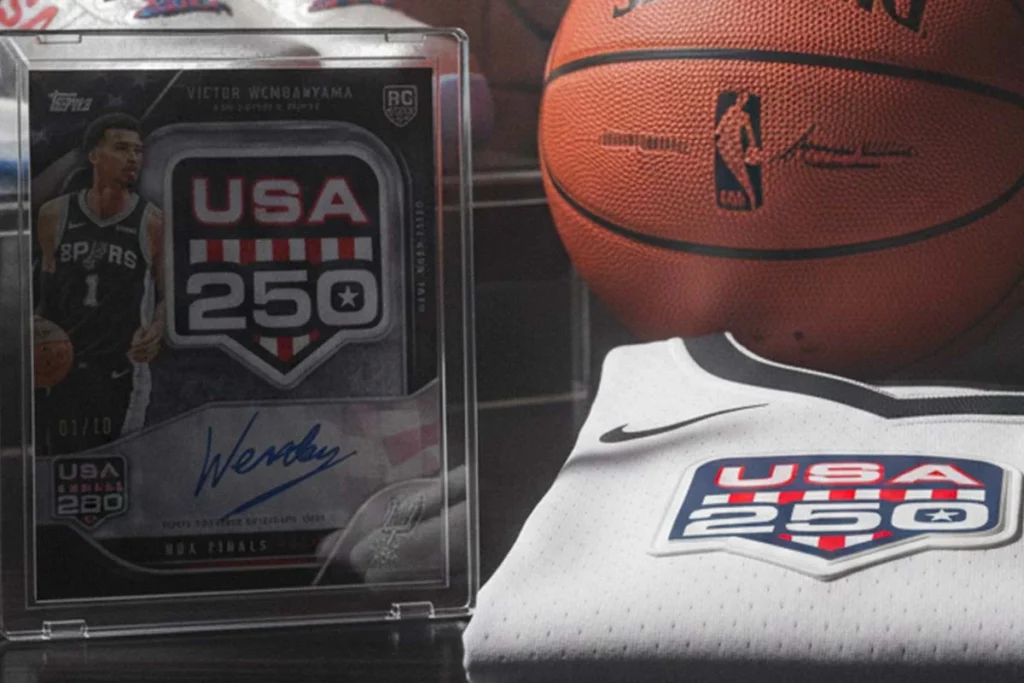
Faced with this growing disaffection, Topps (under Fanatics) pulled out a massive seduction weapon: the return of the ultra-targeted Game-Worn. Jerseys worn at major events, as with the upcoming patches for the Finals or the program « USA 250 », removed directly after the buzzer to be cut and inserted into the cards. A salvific return to the roots or yet another marketing maneuver?
The “Non-Associated” Shipwreck: When the Hobby Lost Its Soul
During the golden age of the 2000s, owning a Game-Used card from Upper Deck or Topps offered a unique thrill. You touched a piece of history, a patch of fabric impregnated with the sweat of a regular-season game, sometimes identifiable thanks to the photomatching.
Panini’s hegemony swept away this magic. To fuel dozens of sets per year, the manufacturer systematically used relics from training (“player-worn” worn for two seconds during Rookie Photoshoots) then, the height of cynicism, entirely anonymous fabrics (“non-associated”). The result? A dramatic loss of value on the secondary market. A current star relic card now sells at the price of a simple base raw card, snubbed by collectors who refuse to pay for supermarket textile.
The Topps Method: The Rise of the Relic “On Demand”
To win back purists, Topps understood that it was necessary to reintroduce traceability and immediacy. The concept has proven itself with the MLB Debut Patches: a unique badge, sewn on the sleeve of a rookie for his very first game, removed immediately after the game, authenticated by the league, and then inserted into a 1/1 card.
With the project « USA 250 » and the Finals jerseys, Topps pushes the concept even further. Players wear jerseys with patches specifically designed to be cut. The trust contract seems restored: the fabric has indeed touched the field, it has lived the intensity of a crucial match, and the collector can link his card to a precise date in the history of the sport.
But this mechanism raises a fundamental ethical question. A patch artificially created by a brand to be immediately destroyed, does it have the same emotional value as an authentic piece of organic jersey?
| Type of Relic | Provenance of the fabric | Photomatching Potential | Emotional Value | Market Trend |
|---|---|---|---|---|
| Panini “Non-Associated” | Unknown (often retail) | Impossible | Nil | In freefall |
| Topps “Debut/Event Patch” | Worn 1 game (created for the occasion) | Guaranteed 100% | Medium to Strong | Speculative bubble |
| Game-Worn Classic (Vintage) | Regular season / Playoffs jersey | Possible (active search) | Maximum | Stable safe-haven value |
The Artifice vs. History: The Debate on Legitimacy
The problem with these new ultra-specific patches lies in their very nature: they were born to end up behind plastic. They do not carry the history of a jersey worn for a month of fierce competition, marked by the marks of the floor, sweat, or tears. We are no longer in preserving sports heritage, but in manufacturing rarity.
For many old-school collectors, these cards resemble disguised manufactured patches. Certainly, the player did sweat in it for 48 minutes, but the object was designed by designers at Fanatics with the sole aim of generating frenzied box openings among the breakers. The jersey’s primary function as sports equipment is stripped away to turn it into a pure financial product from its inception.
How to shape your collection in this new era?
The return of the genuine Game-Worn by Topps remains excellent news for the credibility of the Hobby. It forces the market to raise its standards of transparency. However, the savvy collector must learn to navigate between marketing hype and the intrinsic value of the object.
Favoring cards where the authentication process is transparent (such as MLB’s authentication program with a hologram) is an excellent barrier against depreciation. But don’t fall into the trap of overpaying for rookie cards whose only appeal is an artificially created patch for the occasion. The history of a sport is written over time; an authentic piece of classic jersey, even without advertising glitter, will always retain that extra soul that makes the nobility of our passion.