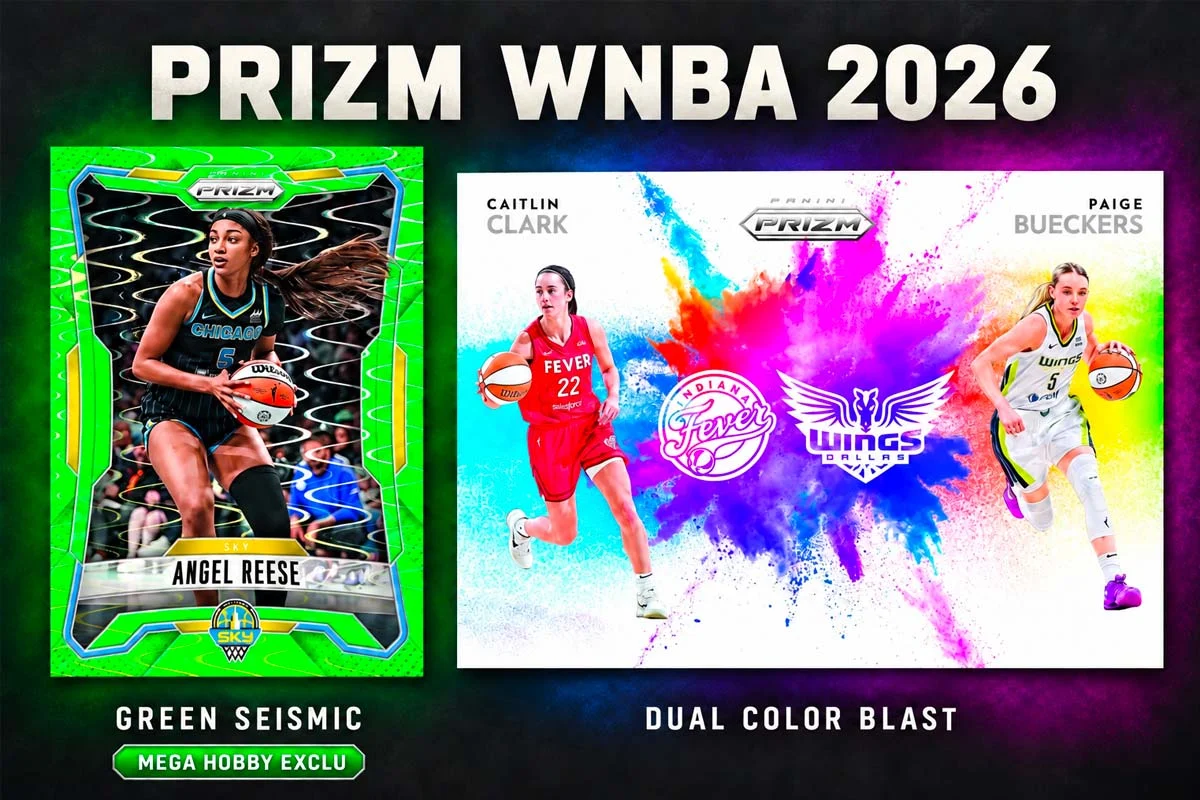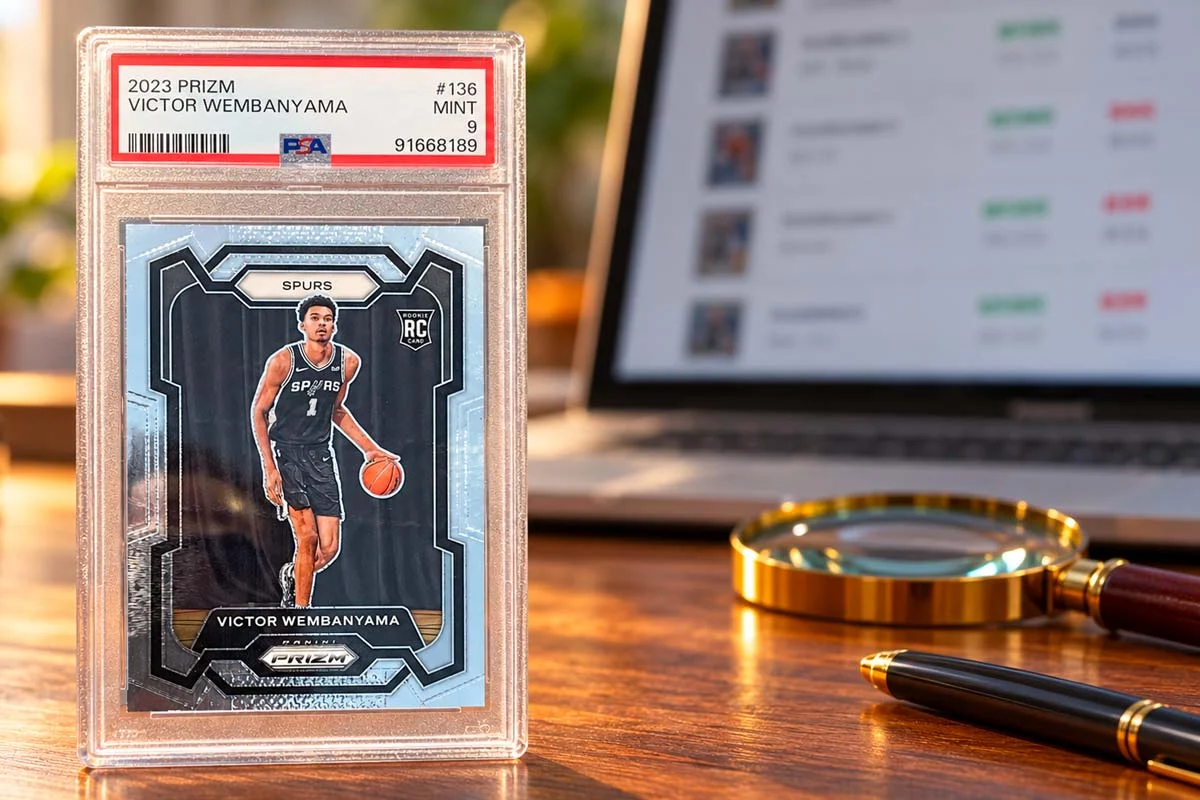

Here we are, the first Topps Chrome Basketball boxes stamped with the league’s official logos have just landed with breakers and in hobby shops around the world. Seventeen years of Panini’s monopoly come to an end, closing a fascinating historical loop. This tectonic shift, orchestrated by the Fanatics machine, is not just a simple logo change on our slabs. It is a masterful lesson on brand survival, the value of nostalgia, and the redefining of our collections.
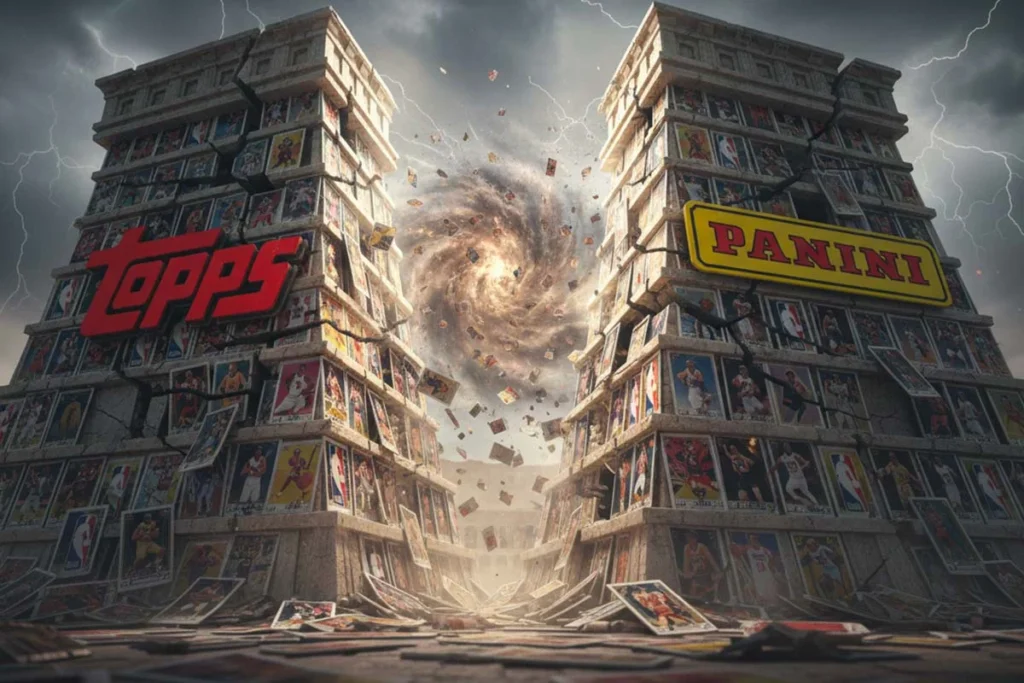
The Great Rights Waltz: Anatomy of a Cyclical Market
To grasp the scale of the seismic shake we’re experiencing this month, a look in the rearview mirror is in order. The history of NBA licenses is a succession of golden ages and absolute monopolies.
| Period | Official NBA license holder(s) | Market impact |
|---|---|---|
| 1990 – 2009 | Topps, Upper Deck, Fleer, SkyBox (Shared) | Era of hyper-creativity. Birth of mythical inserts (PMGs) and the first patches carried. |
| 2009 – 2025 | Panini America (Absolute Exclusivity) | Standardization of the Hobby. Explosion of the Opti-Chrome format, massive democratization of RPAs. |
| Since 2026 | Topps / Fanatics Collectibles (Exclusive) | Return to heritage. Fusion of premium nostalgia with the direct-to-consumer distribution ecosystem. |
The Refractor DNA: How Topps Invented It All in 1996
To understand why Topps’ return in 2026 triggers so much emotion among experienced collectors, one must go back to the origin of it all. Topps Chrome Basketball was born in 1996, immediately setting a new standard with its chrome finish, its dazzling Refractors, and its clean photography. The often little-known peculiarity of this inaugural edition: it was released exclusively in retail, in very limited quantities, so that hobby retailers had to scour supermarkets to find boxes. The set boasted a gold-class rookie lineup: Kobe Bryant, Allen Iverson, Steve Nash, and Ray Allen were all in this 220-card set, with a Refractor coming out on average every 12 packs. No one at the time could measure what these cards would become. Kobe’s rookie Chrome, which could be found for $12 consigned in a Los Angeles store, ended up trading for between $13,000 and $16,250 per sealed box. The Refractor wasn’t just another parallel — it was a philosophy: the same card, enhanced by light, accessible to all but infinitely desirable. It is exactly this promise that Topps is attempting to reactivate in 2026.
2003 : Upper Deck Exquisite, the $500-per-Pack Revolution
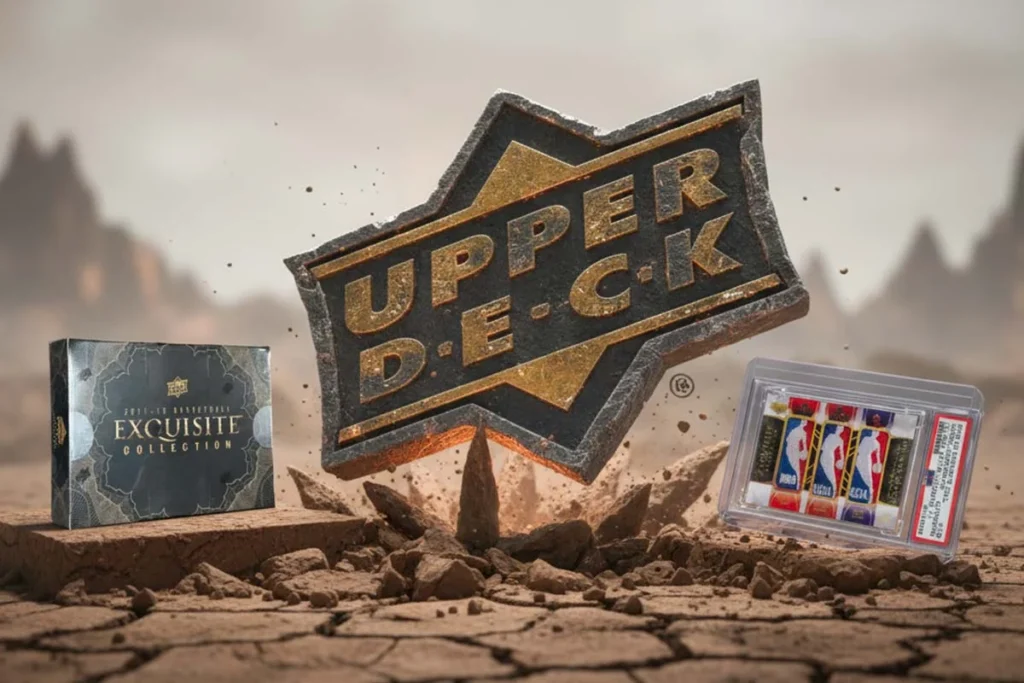
If Topps Chrome laid the foundations, it was Upper Deck that built the first floor of the modern cathedral. When Upper Deck announced a set sold for $500 per pack, the Hobby cried foul. Some dealers refused the product on principle, others out of fear of financial risk. The architect of the set, Karvin Cheung, had his revelation when he saw LeBron James on the February 2002 cover of Sports Illustrated — the first time a high schooler landed that cover. He knew he had found his muse. The concept is disarmingly simple: a clean, almost minimalist design, letting the photo, the patch, and the autograph speak for themselves — the same formula as the great luxury houses. The result exceeded all projections. LeBron’s rookie RPA numbered 99 sold for $2.4 million in 2021 and has sold at least 14 times for more than a million dollars. Heritage Auctions places the 2003-04 Exquisite in the same pantheon as the Topps ’52 set and the T206 — that is, the most important sets in the history of collecting. When Panini took back the license in 2009, it was this standard that it had to not only maintain but surpass.
2009: The Original Trauma and the Rise of the Italian Era
Remember the shockwave. When the NBA announced in 2009 that it would entrust the keys of the truck exclusively to Panini, a brand then seen as a simple European sticker manufacturer, the Hobby cried foul. Purists mourn the death of the legendary Exquisite Collection from Upper Deck and the brutal disappearance of Topps Chrome, which had given us the mythical LeBron James rookie card in 2003. This forceful transition forced the market to adapt. Panini’s first year coincides with Stephen Curry’s rookie season. With no competition, the Italian publisher had to impose its own standards to legitimize its reign.
National Treasures & Prizm: The Two Pillars of the Panini Empire
A forced heir to a throne he hadn’t built, Panini nevertheless goes on to achieve one of the greatest legitimization feats in Hobby history. Two sets are the architects.
National Treasures first, launched from the very first season, which takes the Exquisite’s RPA concept and densifies it: a patch numbered to 99, on-card autograph, premium material. The format becomes the investor’s Grail, the absolute reference of the luxury segment for fifteen years.
Then comes the turning point of 2012. Panini releases its first Prizm Basketball set, a mass-market product designed for the everyday collector. The Silver Prizm — a non-numbered parallel dropping at two per hobby box — becomes almost immediately a phenomenon. In this first edition, the Silver was estimated to have a print run of about 180 copies per player, and the Gold was limited to 10 copies. The timing is perfect: the 2012 rookie checklist features Anthony Davis, Kyrie Irving, Damian Lillard, Kawhi Leonard, and Klay Thompson — an entire generation of future superstars on one set. The inaugural set offered only three parallels in total. The 2022-23 version had 52. This inflation of parallels is the symbol of the Panini empire: an overflowing creativity that ends up biting its own tail, diluting the rarity it was supposed to preserve.
The Refractor vs. Silver: Two Philosophies of Rarity
You cannot understand the intensity of the 2026 transition without understanding culturally what the opposition between these two emblematic parallels represents. The Refractor of Topps Chrome was born out of a technical constraint: it was Topps Finest in 1994 that introduced the first Refractor, before Chrome picked up the concept two years later. Its magic lies in an optical phenomenon: when tilted under light, the metallized card reveals its own rainbow. Each Refractor is unique in its visual behavior, even if print runs are sometimes large.
Panini’s Silver Prizm, on the other hand, is a different proposition: non-numbered, with a stark black-and-white design, its rarity comes from its status as an “accessible” parallel in an increasingly complex ecosystem. Many predict that the long-term heritage of the 2012 Silver Prizm could resemble that of the 1996 Topps Chrome Refractor — with notable differences, including a lower print run and the absence of the browning/discoloration problems that affect some older Chrome cards.
In 2026, the market decisively settles the debate between the two camps: Topps brings back the Refractor with its original codes, a palette of parallels from Magenta to 1/1 Superfractor, while the Silver Prizm from 2012-2018 begins its process of vintage sacralization. Both objects tell different stories about what makes a card desirable — and collectors who understand both have the edge.
2026 : The King Topps Reclaims His Crown
The revenge is a dish best served cold. By absorbing Topps, Fanatics patiently waited for Panini’s contract to expire at the end of the 2025 season. Today, the scent of new cardboard in hobby shops carries a scent of historic victory. What strikes in this 2026 transition is Topps’ strategy: where Panini had to invent everything, Topps plays the heritage card with surgical efficiency.
Topps Chrome 2025-26 : le retour du fils prodigue
Topps Chrome Basketball 2025-26 ships on December 18, 2025 — its first fully licensed year since 2008-09. The product is a statement of intent as much as a set of cards. The 299-card checklist is accompanied by more than 48 parallels and includes on-card autographs from Cooper Flagg, Dylan Harper, Ace Bailey, Victor Wembanyama, LeBron James, Stephen Curry, Giannis Antetokounmpo, Nikola Jokic, and Shai Gilgeous-Alexander. The latter name is particularly symbolic: SGA was one of the major absentees from Topps’ checklists during the licensing hiatus. Topps also introduces Gold NBA Logoman Relics, patches authenticated directly taken from the special jerseys worn by the MVP, the ROTY and the DPOY of the previous season — an innovation that immediately creates new ultraprime objects of desire. Youthquake inserts return, a direct nod to the founding set of 1996. Topps doesn’t merely return: it tells a story of continuity that Panini could never have written. For the collector who has lived through both eras, opening a box of Chrome 2025-26 is not just a purchase — it’s a reconciliation.
The Resurrection of Legendary Franchises
The return of the Topps Finest line triggered endless virtual lines. The introduction of Bowman Draft for NBA prospects, modeled on the ultra-profitable baseball model, completely redraws rookie speculation. The “1st Bowman” concept is fast making the usual college cards we used to see at the start of the season look dated.
Navigating the Troubled Waters of the Transition
The discerning collector today observes a fascinating dichotomy. Panini’s detractors predicted the collapse of their values following the loss of the license. The market shows us a reality much more nuanced.
The historical pieces of the Panini era — the original Kaboom!s, the Giannis, Luka, or Edwards Silver Prizms, the National Treasures RPAs — are undergoing the same process of sacralization as the Topps Chrome of the 2000s when switching to Panini. They instantly acquire “vintage” status. A PSA 10 slab of a 2018 Prizm Silver won’t lose its value; it becomes the frozen testimony of a bygone era.
Your strategy for the second quarter of 2026 should revolve around two axes. Secure your emblematic Panini cards, especially the rare and numbered parallels of current superstars, because supply has just been cut off. At the same time, position yourself smartly on the early editions of this new Topps era. The Refractors of the current draft class, if they achieve perfect grades at PSA or SGC, will constitute the new reference bedrock for the coming decade. The king is dead, long live the king.