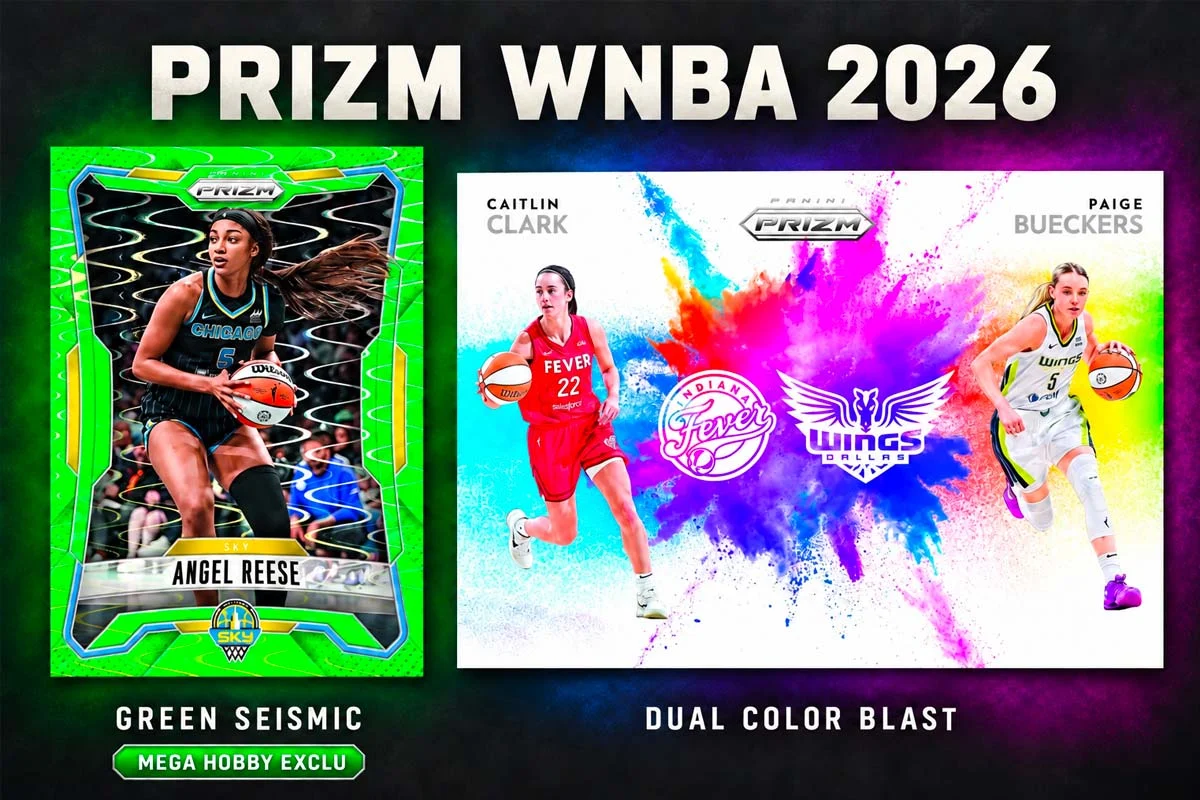

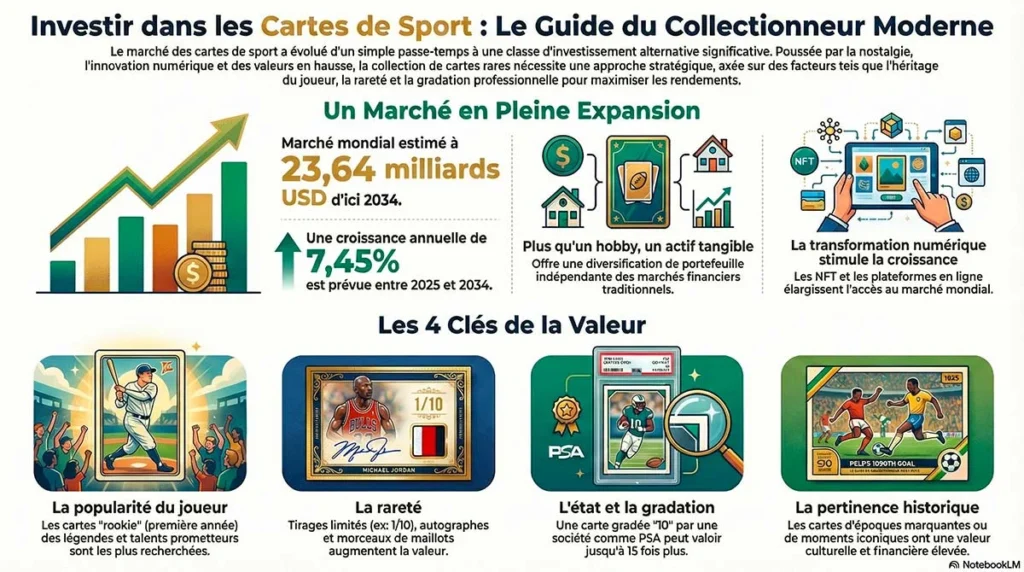
Formerly relegated to the rank of mere nostalgic memories, sports trading cards have undergone a spectacular metamorphosis. They are now recognized as legitimate and highly valuable alternative assets. This booming global market was valued at about 11.52 billion USD in 2024 and projections indicate it should reach 23.64 billion USD by 2034, with a compound annual growth rate (CAGR) of 7.45% over this period. This dynamism is fueled by scarcity, nostalgia, growing interest in portfolio diversification, and rapid digital transformation.
Les cartes rares : L’équilibre entre histoire et performance
The value of a card is intrinsically linked to the player’s historical significance, the card’s condition, and its level of rarity.
Les trésors historiques du football
The roots of this market date back to the early 20th century, when cards were often inserted into tobacco or candy packs. Cards from that era are extremely sought after due to their age and cultural significance. In the football world, the 1928 Ricardo Zamora card, a legendary Spanish goalkeeper, and the 1934 Giuseppe Meazza card (World Cup star in Italy) are considered true “little bits of football history on paper.”
Les icônes modernes
The modern era is not short of cards reaching astronomical prices. Rookie cards (first editions) and limited editions of marquee players are particularly in demand.
For example, the rookie card of Cristiano Ronaldo (Panini, 2002) or that of Lionel Messi (Mega Cracks, 2004) are considered top-tier investments. The rarity and auction results of these cards, coupled with the players’ popularity, place them in the elite category of collectible cards.
Several factors drive the value of a modern card:
- The very limited print runs (such as 1/10 or 1/1 versions).
- The inclusion of an original autograph from the athlete.
- The inclusion of a piece of jersey worn in a match.
- The status of first edition or a “rookie” card.
- The certification by a recognized organization (PSA, Beckett, etc.).
Moreover, in the sports world, basketball cards currently generate the highest revenues worldwide, driven by the international appeal of players such as Michael Jordan and LeBron James.
Grading: Multiply Value Through Certification
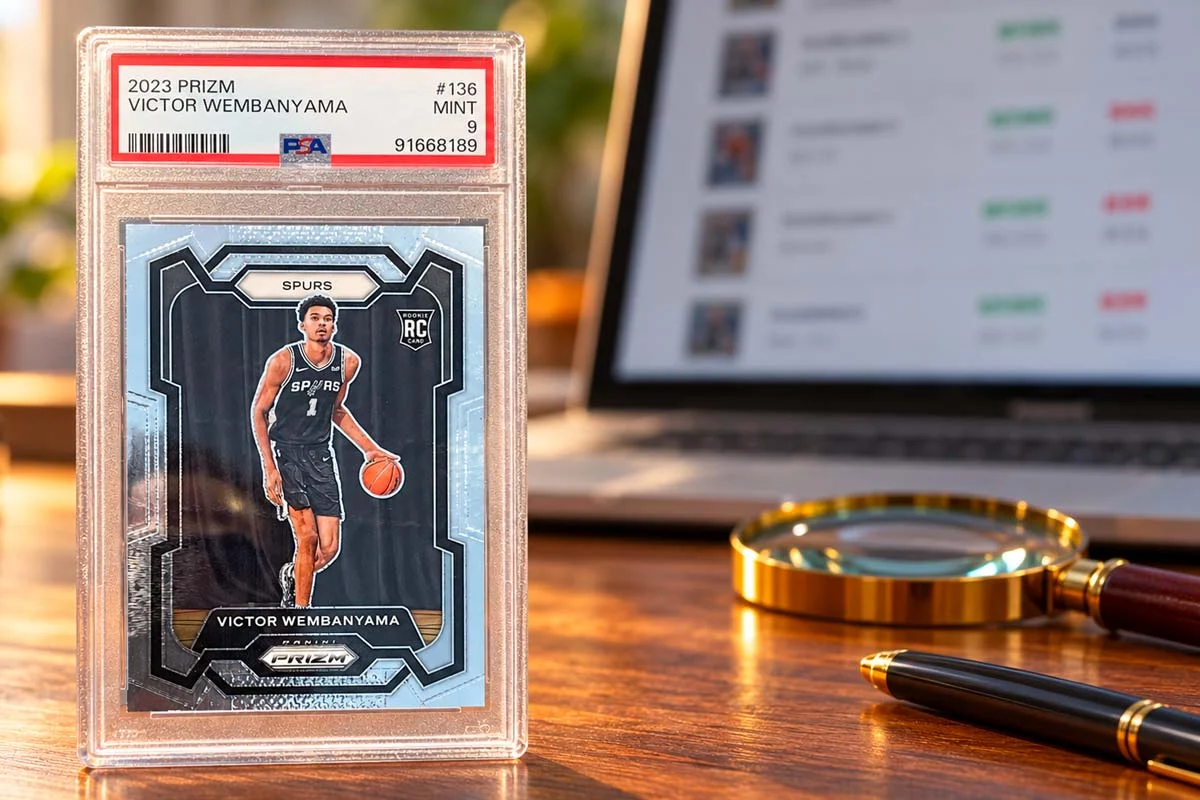
For collectors and investors, card grading is an almost essential step to maximize resale potential. Grading involves certifying the card’s authenticity and assessing its condition according to rigorous criteria (centering, corners, edges, surface).
Certification greatly increases the credibility and liquidity of a card on the market. A card graded by professional services inspires confidence and sells more quickly. The price gap between an ungraded card (called loose or raw) and a perfectly graded card can be spectacular: a card reaching the maximum grade (PSA 10, for example) can be worth up to 15 times more than an ungraded card.
The main grading firms recognized internationally are:
• PSA (Professional Sports Authenticator): Often the reference for the maximum resale value and overall popularity.
• BGS (Beckett Grading Services): Very well regarded in the sports field for its detailed analyses and rigor (the Black Label grade being the ultimate goal).
• SGC (Sportscard Guaranty Corporation): Offers good value for money and often faster turnaround times.
L’ère numérique et la transformation du marché
The collectible card industry is undergoing consolidation and digitization.
The Fanatics Revolution and Market Concentration
The market has recently been marked by major changes, notably Fanatics’ acquisition of Topps, as well as the upcoming acquisition of Panini. These strategic moves aim to modernize the collecting experience by incorporating technology and social media, promising interactive and immersive platforms, including live video platforms for breaks (live product openings).
NFTs and the Future of Collecting
The integration of digital technologies has introduced blockchain-based collectibles, or NFT (Non-Fungible Tokens). These digital tokens leverage notions of scarcity and collectibility, opening up new revenue streams for sports entities.
• NBA Top Shot: The platform pioneered the sale of game clips as NFTs, generating hundreds of millions of dollars and attracting tech-savvy collectors.
• Sorare: Nicknamed the “Panini version NFT,” Sorare is a fantasy league where the buying and exchanging of football players’ cards are done via NFTs guaranteed by the Ethereum blockchain. Rare superstar cards like Cristiano Ronaldo have fetched dizzying prices (for example, 240,000 euros for a single card).
Conseils pour l’investissement stratégique
Investing in sports cards requires discipline and a long-term perspective.
1. Seek quality and rarity: Focus on cards in excellent condition and certified. Target premium series and numbered cards with growth potential.
2. Be patient and stay informed: Success hinges on strategy and patience. The value of rookie cards of emerging players often takes years to reach its full potential. Following sports news is crucial, as a championship win or an exceptional performance can boost card values.
3. Diversify : Avoid putting all your capital into a single player or a single sport. Balance your collection between established legends, current stars, and promising young talents to mitigate risks and maximize potential returns.
Collecting sports cards is an exciting blend of history, emotion and financial opportunity. By focusing on quality, rarity, and following the trends of a rapidly expanding digital market, collectors can turn their passion into a smart long-term investment.