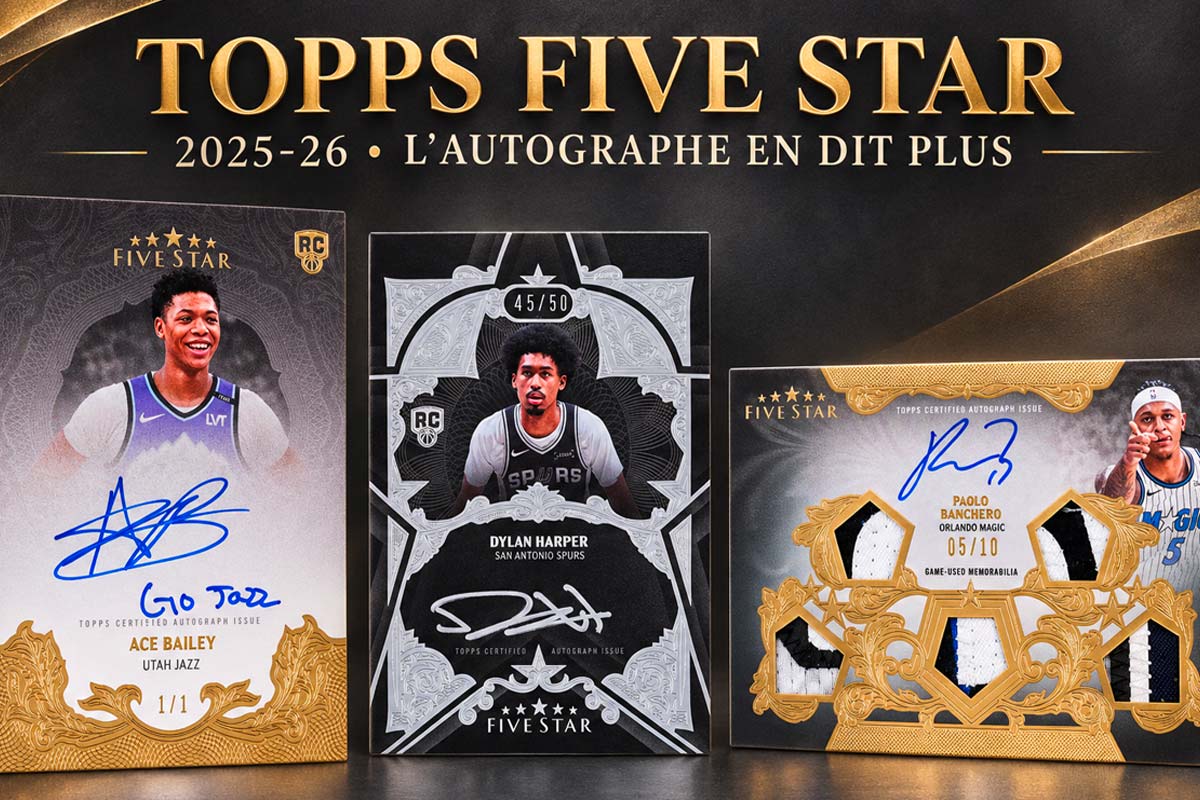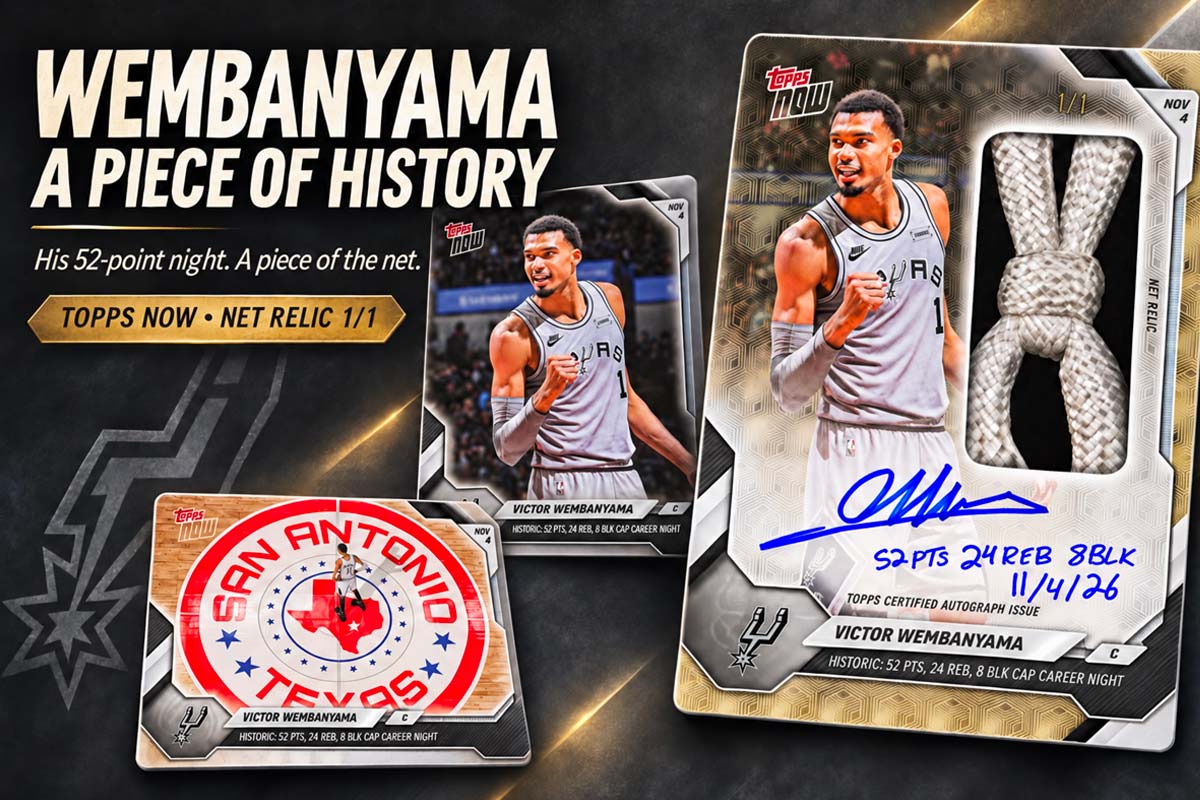

We were waiting for it as the Messiah or as the Apocalypse, depending on the state of our bank account. The return of the NBA license to Topps is now a tangible, icy, and gleaming reality. With the launch of the very first Sapphire edition under official license since Fanatics took over, the Hobby has just crossed an irreversible psychological and financial milestone. Forget the over-printed Panini Prizm sets; the new standard of exclusivity is written in sapphire blue.
The End of the Desert Crossing (2009-2026)
It had been seventeen years. Seventeen long years that collectors had not seen an official NBA logo on a Chrome card. For purists, the last reference remained the mythical rookie year of Steph Curry in 2009-10. In the meantime? The void, filled by Panini products which, let’s face it, were starting to go in circles, and Topps logo-less attempts where players seemed to wear matching pajamas.
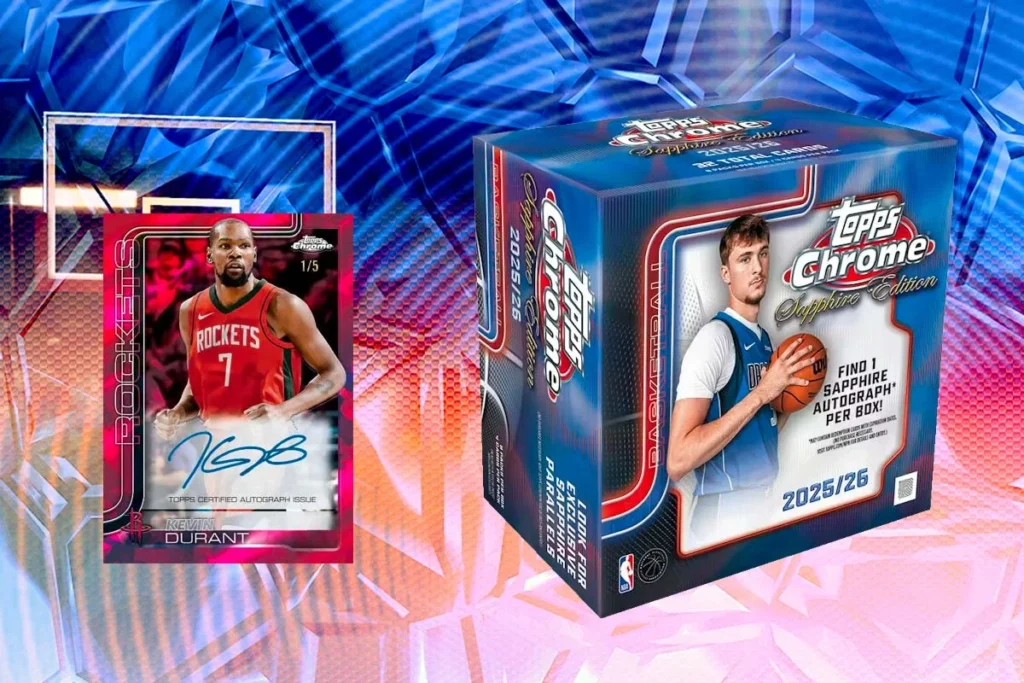
The arrival of this series Topps Chrome Sapphire Edition 2025-26 is not just another “release” on the calendar. It’s a declaration of war. Fanatics has chosen to strike hard by deploying immediately the “Sapphire” finish – this pattern cracked ice which has exploded the value of baseball and F1 – onto the NBA parquet.
The message is clear: Topps is not back to merely figure, but to dry up the secondary market and redefine the notion of “premium”.
999 $ Lottery Ticket: The EQL as the sole judge
The announced price (MSRP) has grated on teeth: $999 per box for 32 cards. No autograph guaranteed, just the promise of this blue chrome finish and a few numbered parallels. At another era, this price would have sparked a riot. Today? It’s the price of admission to the club.
The EQL lottery system, meant to “democratize” access and filter bots, mainly served as a reveal of the insane demand. If you managed to secure a box at retail price, you literally won the lottery. In the minutes following the selection notifications (and especially the rejections), Discord groups and eBay pages went up in flames.
This phenomenon strangely recalls the launch of the “Topps Mercury” set of Victor Wembanyama last year, which had already tested the elasticity of collectors’ wallets. Fanatics has learned the lesson: artificial scarcity coupled with a strong brand (Sapphire) justifies any entry price.
The carnage of the secondary market
This is where the analysis becomes dizzying. Barely the first boxes shipped, the grey market has dictated its terms. We’re not talking about a twofold swing, but a fivefold multiplication.
The big American breakers, who secured entire cases via preferential allocations, immediately displayed break prices that defy comprehension. Paying $300 for a random team spot without a guaranteed hit has become the norm this weekend.
Here is a snapshot of the movements observed in the first 48 hours :
| Product / Card | Release Price (MSRP) | Resale Value (Day +2) | Trend |
|---|---|---|---|
| Hobby Box (Sealed) | 999 $ | 5 200 $ – 5 500 $ | 🚀 Bullish |
| Case (10 Boxes) | ~10 000 $ | 55 000 $ + | 🔥 Volatile |
| Cooper Flagg Base (Raw) | N/A | 800 $ (Pre-order) | ⚠️ Speculative |
| Wembanyama Sapphire (Year 3) | N/A | 350 $ | ➡️ Stable |
| Spot Breaker (Random Team) | N/A | 300 $ – 450 $ | 📉 Expected Correction |
This table illustrates a brutal reality: the sealed box has become a higher-performing financial asset than its contents. Many buyers have no intention to rip. They hold, hoping that the product’s rarity (the first of the Fanatics era) makes it the “1986 Fleer” of modern times within ten years.
Quality, Grading and “Gem Rate”
For those who dare to tear the plastic, the reality of Topps’ Quality Control (QC) catches up to the dream quickly. The Sapphire finish is notoriously difficult to grade. The surfaces are sensitive to factory scratches and centering is often capricious on these cards with complex borders.
Getting a PSA 10 on a major rookie card from this set won’t be a given. The “Gem Rate” (10-rate) is likely to be low, which will create a colossal price gap between a raw card and a perfect slab. That’s where the real game for investors will play out: chase the perfect card to send to PSA or BGS, and hope for the Holy Grail. A Padparadscha (1/1) of Cooper Flagg or Ace Bailey in this set could potentially reach six figures before the end of the playoffs.
The “First Edition” Effect
Why this irrational craze? It’s the “Logo” effect. Seeing the official jerseys of the Lakers, Celtics, or Spurs on Topps chrome triggers the nostalgia of collectors in their thirties and forties. Panini has done good work with Prizm, but for many, Topps remains the parent company.
Moreover, the clean design of the Sapphire, without the sometimes excessive flourishes of modern products, re-centers the debate on the photo and the player. It’s a return to fundamentals, but at an elitist price.
If you weren’t lucky enough to be drawn in the EQL lottery, caution is warranted. The current FOMO (Fear Of Missing Out) is at its peak. Prices of $5,000 per box are fueled by pure speculation and the excitement of novelty. Hobby history has taught us that prices often settle once the breakers flood the market with singles and that the next big release (probably Topps Chrome “classic” or Finest) will poke its head out. Buying a well-centered single in a few weeks will likely be less painful than betting the price of a used car on a sealed box today.