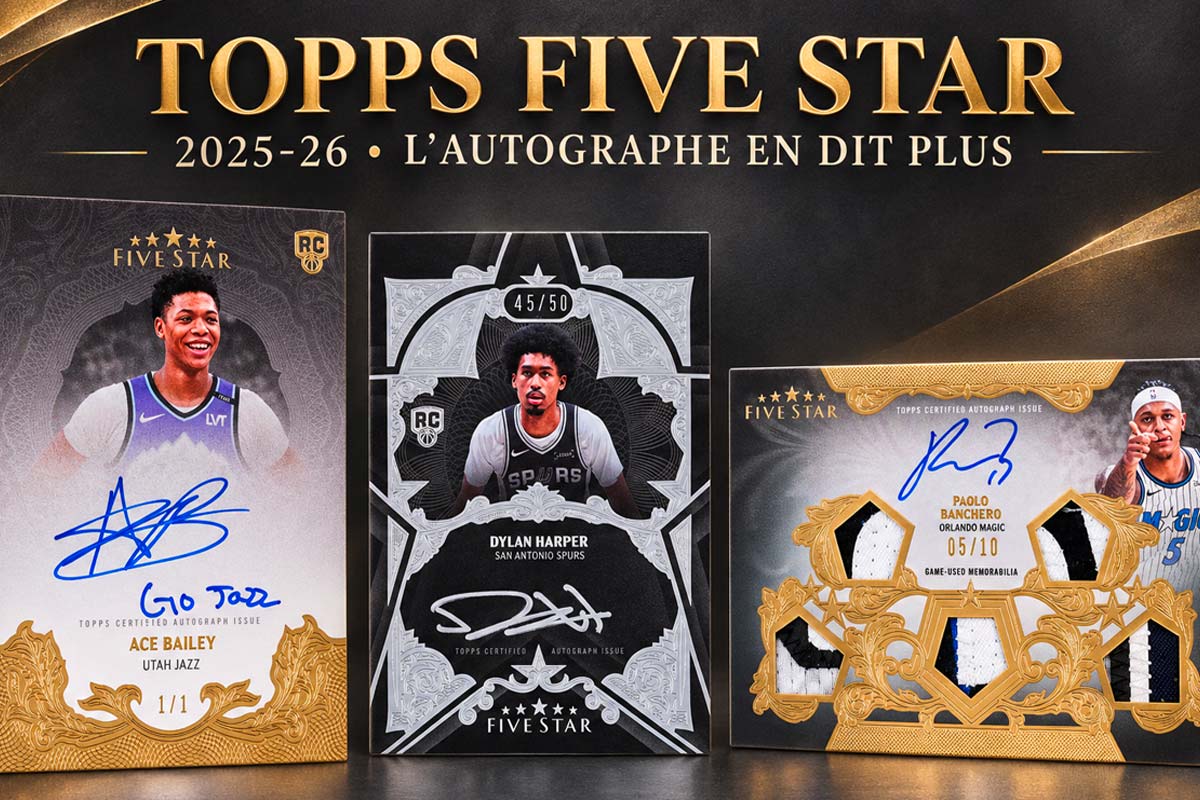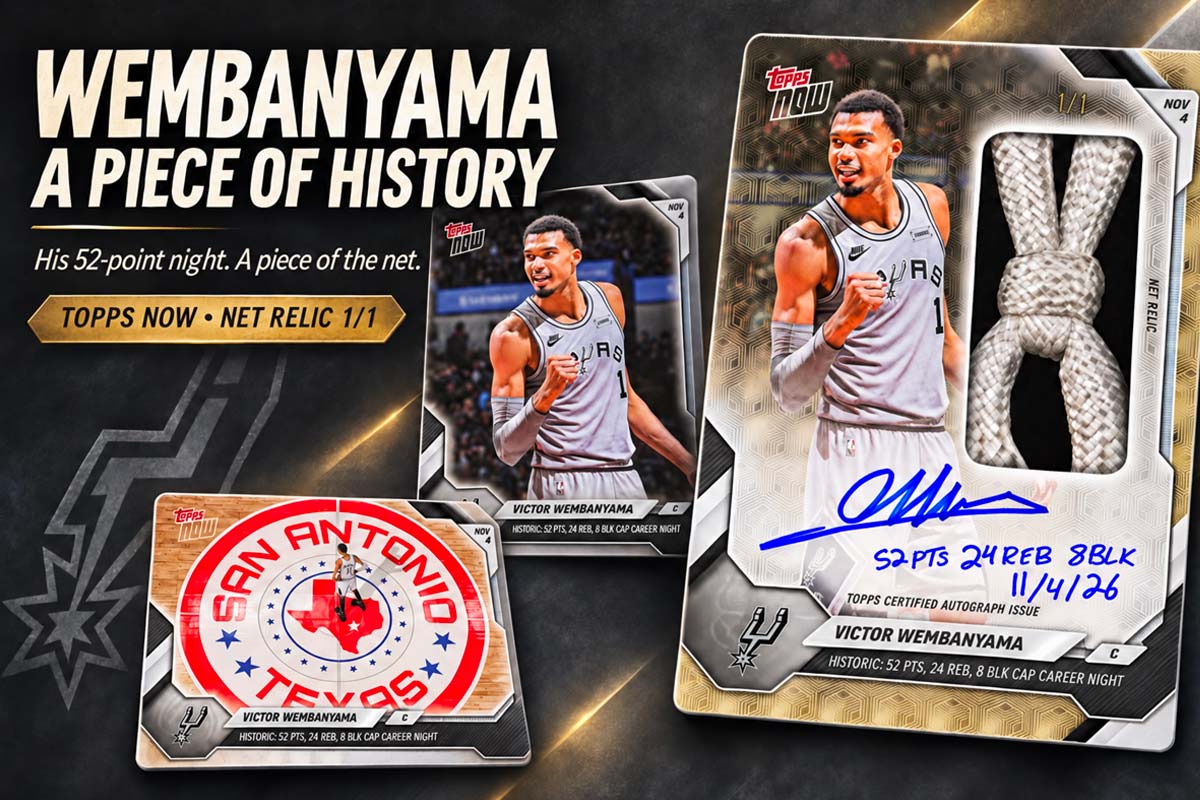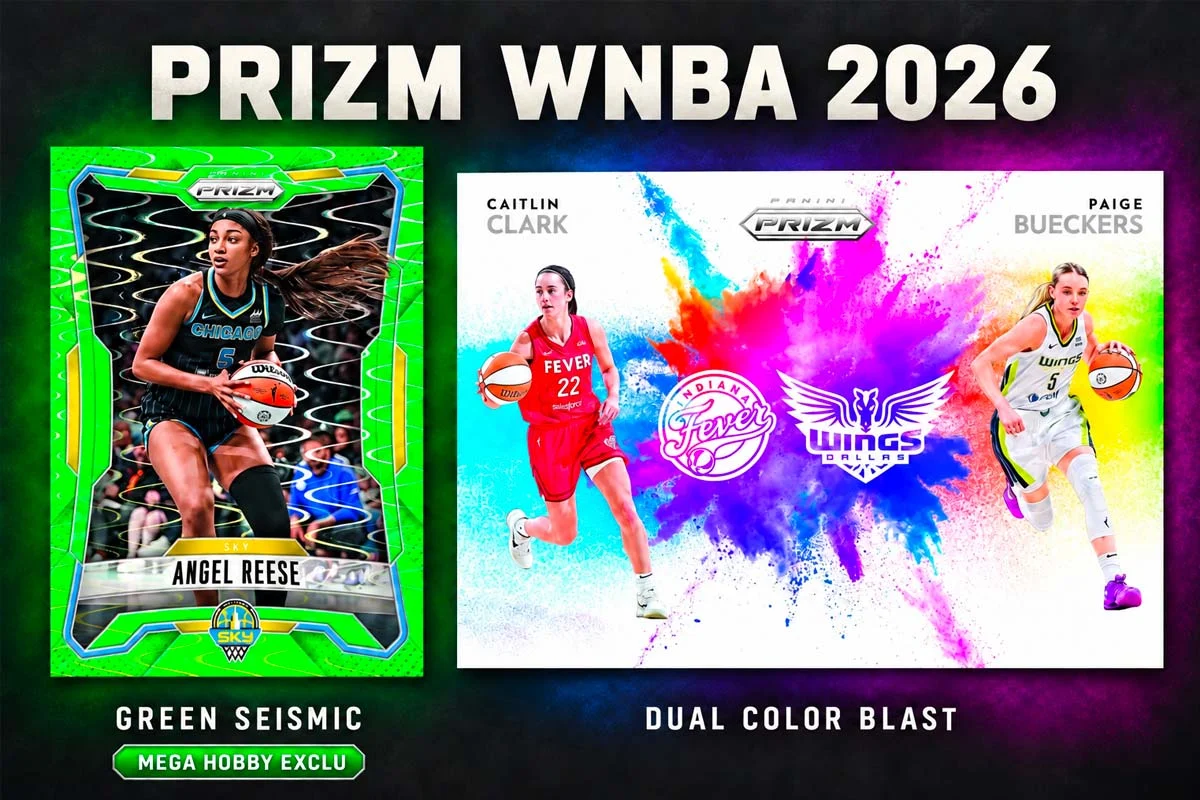

2026 marks a date that will not go unnoticed in the world of the Hobby: the 40th anniversary of the 1986 Fleer Basketball set. Forty years since those 40-cent wax packs gathered dust on American counters. Forty years since Michael Jordan’s rookie card was born into general indifference. An anniversary that invites us to revisit the extraordinary history of an ordinary set.
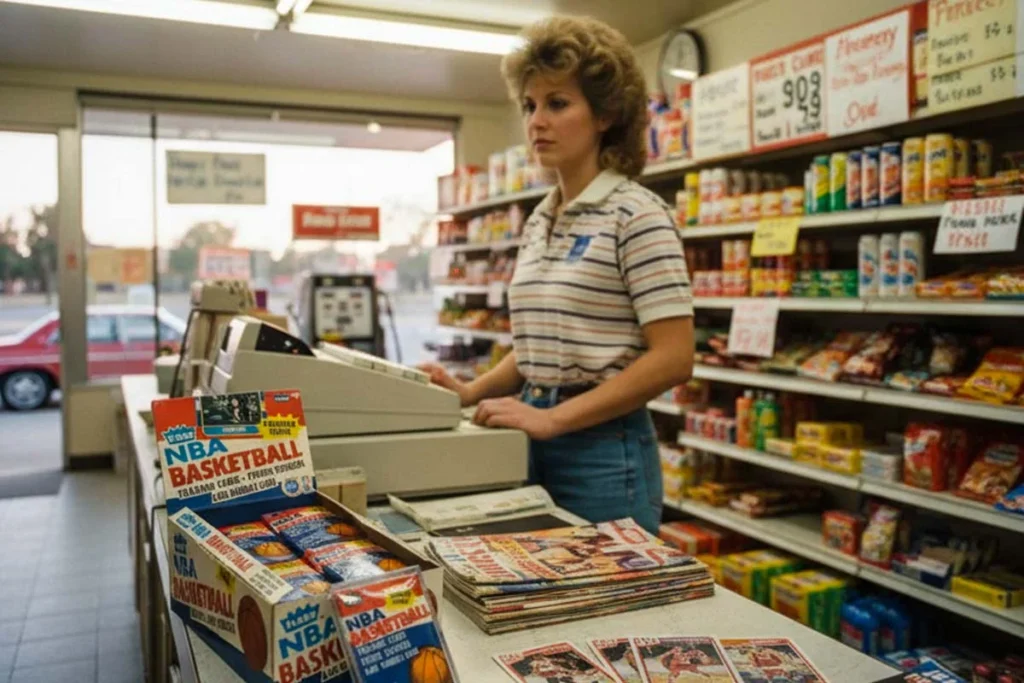
Fleer vs Topps: the forgotten war of American cardboard
To understand the 1986 Fleer Basketball, you have to go back to a lawsuit. In 1980, after decades of monopoly on American sports cards, Topps faced the courts. Fleer and Donruss sue for anticompetitive practices. They win the case. The breach is opened.
Fleer — a company founded in 1885, historically known for its gums and baseball cards — jumps at the opportunity. The company signs a licensing agreement with the NBA in 1986 and is about to launch the first major basketball card series since Topps’ edition of 1981. Five years of void. An entire market to (re)invent.
What Fleer does not yet know is that it is about to manufacture a ticking time bomb.
The 1986 NBA: a league in full renaissance
We must place ourselves in context. At the start of the 80s, the NBA was in crisis. The 1980 finals were broadcast on delay, in the middle of the night, on CBS — too few viewers watched basketball in prime time. The league suffered from an image tarnished by drug scandals and salaries deemed indecent. The executives were seeking a new breath.
That breath arrives from two men. Larry Bird in Boston. Magic Johnson in Los Angeles. Their rivalry since the 1979 NCAA final — Bird at Indiana State, Magic at Michigan State — has transformed into one of the most captivating duels in the history of American sport. The Celtics against the Lakers. The East Coast against the West Coast. The game itself against the spectacle. The audiences rise. The arenas fill up.
Then Michael Jordan arrives. And everything changes.
Drafted third overall in 1984 by the Chicago Bulls — a franchise then moribund —, Jordan explodes in his very first season. 28.2 points per game. A style of play no one had ever seen. He flies, literally. The press gives him a nickname: “Air Jordan”. Nike, which bet on him even before his first NBA game, sees its sales take off. The NBA has found its face for the decades to come.
It is in this electric context that Fleer launches its set in 1986. The league is on fire. And yet, the packs do not sell.
132 cards, an entire pantheon
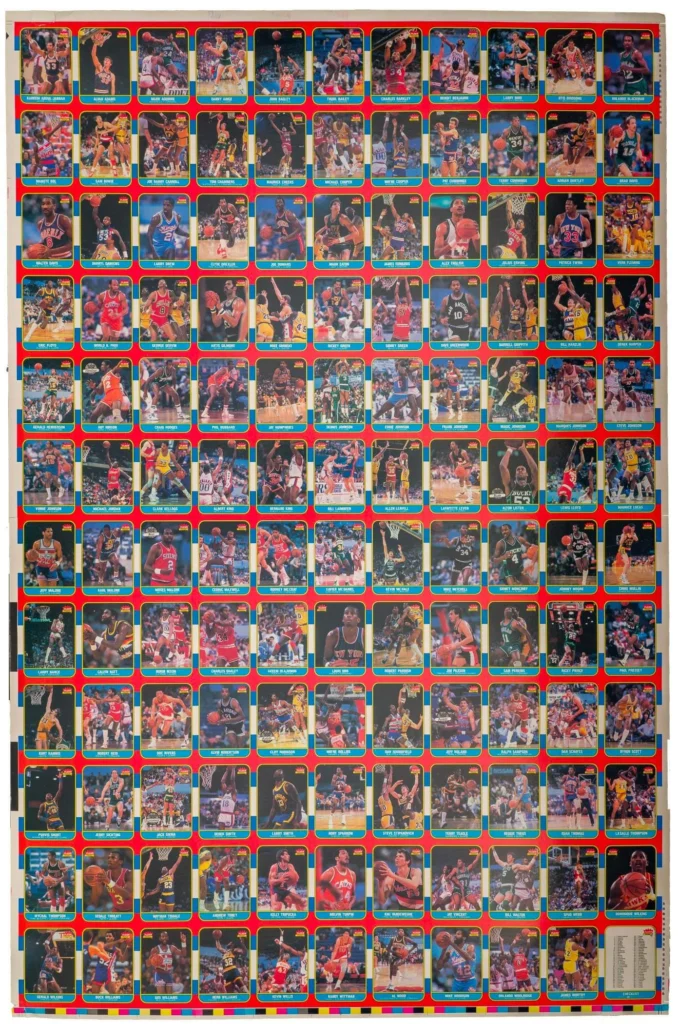
The 1986 Fleer set includes 132 player cards, plus 11 stickers. A checklist that today resembles a Who’s Who of the Hall of Fame, but at the time was only a list of players among others.
The five-year editorial void had an unexpected effect: it concentrated in a single series the first official cards of an entire generation of legends. Charles Barkley, the Ogre of Philadelphia, whose physical power redefines the power forward position. Patrick Ewing, the dominant center of the New York Knicks, first overall pick of the 1985 draft. Karl Malone, “The Mailman”, who will deliver the mail from Utah for eighteen seasons. Hakeem Olajuwon, “The Dream”, whose “Dream Shake” remains the most imitable post move in history and the least imitated. Dominique Wilkins, “The Human Highlight Film”, who turns every dunk into a show in Atlanta.
All in the same set. All in the same 40-cent cardboard box.
Card #57: birth of an icon
Card number 57 of the set features a 23-year-old Jordan, in Bulls attire, in a pose that could have been ordinary. It isn’t. This photo, taken during the 1985-86 season, captures something indefinable — youth, momentum, the promise of what was to come.
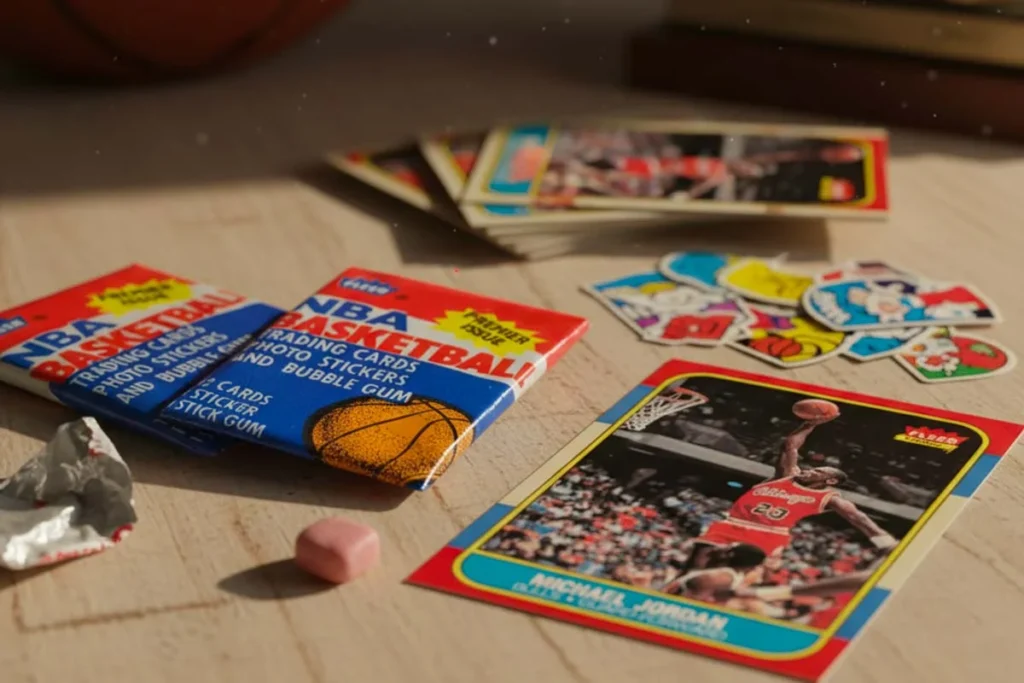
On the back of the card, rookie stats that already make your head spin. At the time, no one really read them. The packs end up in clearance bins. Some collectors throw them away without opening them.
Record auction price for a PSA 10 — reached in 2021. A PSA 8 trades today between €5,000 and €6,500, forty years after its manufacture.
For years, the card slept. It is the 1990s, the hobby’s explosion, that reveal to the general public what a few savvy collectors had understood long before: owning a 1986 Fleer Jordan in good condition is owning a piece of American sports history.
Since then, its value has never undergone a lasting devaluation. It has withstood the Junk Wax Era crash, the 2008 financial crisis, the post-Covid bubble of 2021. Unfazed.
The paradox of the fragile card
The 1986 Fleer has a technical peculiarity that, over time, has become one of its greatest strengths: it is extraordinarily difficult to preserve in perfect condition.
Its red, white and blue borders — a nod to the colors of the American flag — flake at the slightest touch. Factory centering is notoriously random. Finding a raw card with intact corners and a perfectly centered image today is a treasure hunt. This fragility was not an artistic choice: it was simply the limit of the industrial manufacturing of the time.
But this limit produced something priceless: an organic, natural rarity, impossible to reproduce. When a PSA 10 copy exists, it’s a miracle that has survived forty years of existence. You can’t manufacture new ones. You can’t print more. Time did its work of selection.
Forty years later: an intact legacy
In 2026, the 1986 Fleer Basketball marks its forty candles in a Hobby market that is deeply different from the one that gave birth to it. Contemporary cards come in limited editions, numbered parallels, patches, and autographs. The industry has learned to create scarcity by decree.
The 1986 Fleer, though, did not need any of that. Its rarity was built card by card, year by year, in the hands of kids who did not know what they were holding. In clearance bins where no one looked. In basements and attics where time did its work.
Forty years after its quiet release in American grocery stores and toy shops, this set remains the absolute reference of the Hobby. Not because someone decided it. But because history decided so.
Benchmarks — Market values 2026 (PSA 8, NM-MT)
| Player | # | Estimate | |
|---|---|---|---|
| Michael Jordan | 57 | €5,000–€6,500 | Icon |
| Hakeem Olajuwon | 82 | €250–€350 | Big Man |
| Charles Barkley | 9 | €200–€280 | HOF |
| Patrick Ewing | 32 | €150–€220 | HOF |
| Dominique Wilkins | 121 | €120–€180 | HOF |
Indicative estimates — secondary market 2026. Values vary according to eye-appeal and centering specific to each copy.